Monochromatic makeup, the five-minute look that always works
One shade on the eyes, cheeks and lips reads as deliberate rather than unfinished, and it is the fastest way to look put together. Here is how to pick the colour.
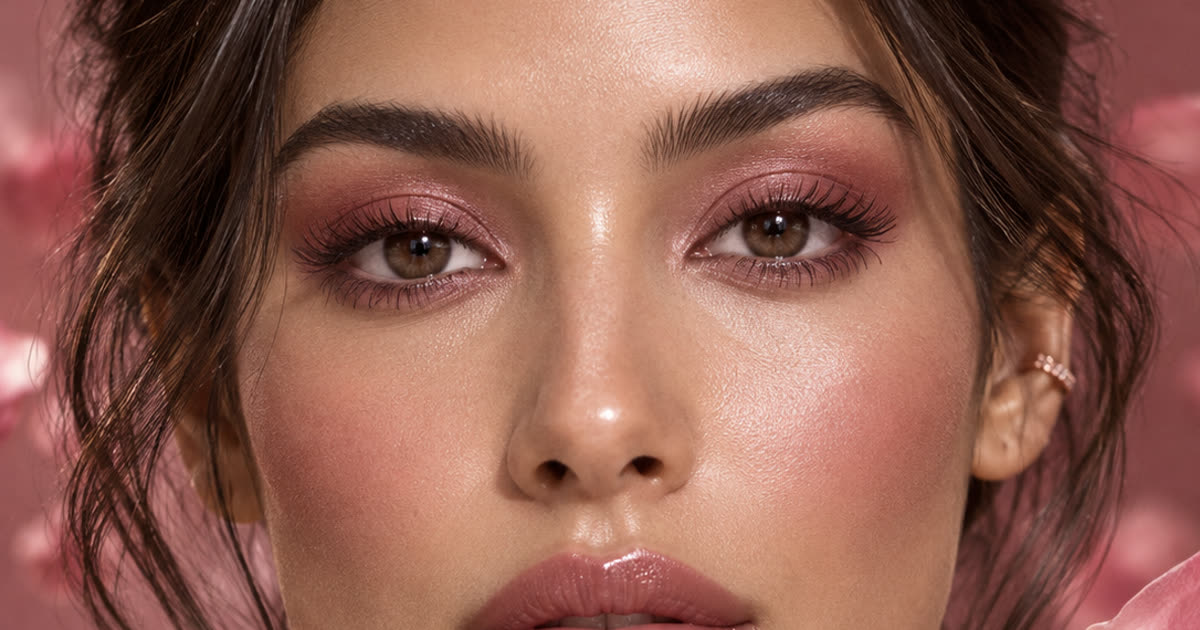
Monochromatic makeup means using one colour family on your eyes, cheeks and lips. It is the fastest complete look there is, because once you have chosen the shade there are no further decisions to make, and it photographs as deliberate rather than rushed.
It is also one of the most forgiving techniques available, since nothing can clash with anything.
Why it works
Most makeup looks fail because of mismatched temperature: a cool pink lip over a warm peach blush, or a golden eye over a rosy cheek. The individual choices are fine and the combination is slightly off, in a way that is hard to name.
Monochrome removes the problem by construction. Everything is the same colour, so everything agrees.
It also creates a sense of intention. A face where the eyes, cheeks and lips clearly relate to each other looks designed, even when it took four minutes.
Choosing your colour
Start from your undertone, not from the shade you like most in the tube.
- Cool undertones: rose, mauve, raspberry, soft plum.
- Warm undertones: peach, apricot, terracotta, warm brick.
- Neutral: most of the above, so pick by depth instead.
If you are not sure which you are, there is a one-minute version of the test in how to find your undertone.
Then pick the depth. A good default is a shade two to three steps deeper than your natural lip colour. Much lighter reads washed out, much deeper stops being wearable in daylight.
The part people get wrong
Same colour does not mean same finish. Using an identical texture on the eyes, cheeks and lips is what makes a monochrome look flat and slightly costume-like.
Vary the finish instead:
- Eyes: soft matte, or a hint of satin in the centre of the lid.
- Cheeks: cream, blended until the edge is invisible.
- Lips: the most saturated of the three, in satin or gloss.
The lips should be the deepest point. If all three are the same intensity, the face reads as a single wash rather than as a look with a focus.
How to do it in five minutes
- Cheeks first, with a cream. Two dots on each cheek, blended out with your fingers. Doing cheeks before eyes means any stray colour disappears under the rest.
- Eyes with the same product, or close to it. Many cream blushes work on the lid. Press it on with a fingertip, keep it low, and blend the top edge soft.
- Lips last, deeper. The same family, two shades down. Blot once and reapply the centre.
- Mascara, and stop. Monochrome does not need liner. Adding it usually breaks the softness that makes the look work.
One product, whole face
The genuinely efficient version uses a single cream blush stick for all three. It is the entire reason multi-sticks exist, and the main thing to check is that the formula is safe for lips, since not every blush is.
This also makes monochrome the best technique for travel and for getting ready somewhere that is not your bathroom.
When not to use it
Monochrome is a soft, cohesive look. It is not the right choice when you want a single feature to dominate, like a graphic eye or a statement red lip.
It is also less effective in very dim light, where everything blends into one tone and the face can read flat. For an evening in a dark room, you usually want one element with more contrast.
See it on your own colouring
The hard part of monochrome is choosing the shade for your own skin, because the same rose that looks expensive on one complexion looks dusty on another.
Monochromatic Rose in Vélora is built around exactly this technique, and the app adapts the depth of the rose to your undertone rather than applying the same shade to everyone. Peach is the warm-toned equivalent.
Related: where to put blush for your face shape, and cloud skin, the blurred finish replacing glass skin.