Cloud skin, the blurred finish replacing glass skin
Cloud skin is a soft-focus, satin-matte complexion that hides texture without hiding skin. Here is how it differs from glass skin and how to get it.
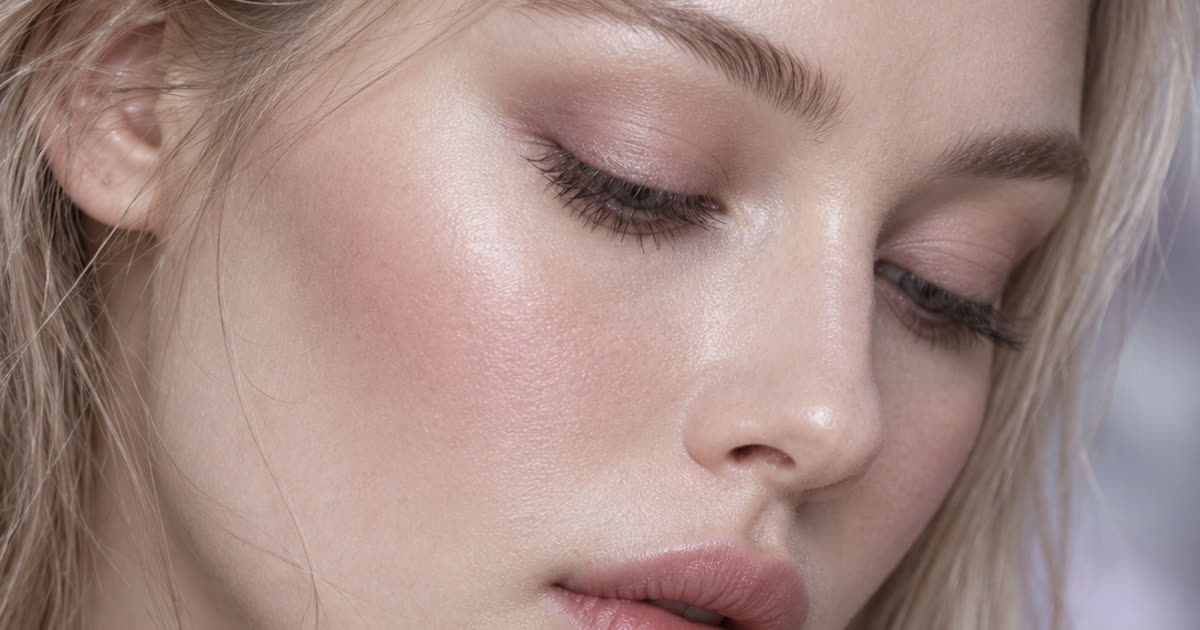
Cloud skin is a complexion finish that looks soft-focus rather than shiny or flat. Think of a photograph taken through a very slight diffusion filter: even, velvety, with the texture of real skin still visible underneath.
It is the main complexion trend of 2026, and it exists largely as a correction to the two finishes that came before it.
Cloud skin vs. glass skin
They are often mentioned together and they are close to opposites.
| Glass skin | Cloud skin | |
|---|---|---|
| Finish | Wet, light-reflecting | Soft matte, light-diffusing |
| Effect | Skin looks hydrated and lit | Skin looks blurred and even |
| Best for | Dry to normal skin | Normal to oily, visible texture |
| Photographs | Can read as shine under flash | Holds up well in most lighting |
Glass skin bounces light back at you. Cloud skin scatters it. That scattering is what softens the look of pores and fine lines without burying them under coverage.
Why it suits more people than glass skin
Glass skin is beautiful and genuinely difficult. It needs skin that is already smooth, because a wet finish magnifies every bit of texture it sits on. On oily skin it slides. In a flash photograph it reads as grease.
Cloud skin asks for much less. The diffusion does the work that coverage used to do, so you can use less product and still get an even result. It is also the more forgiving of the two if you are applying makeup quickly or without good lighting.
How to get it
1. Prep for grip, not for glow. A gripping or blurring primer, not a hydrating luminous one. You are building a surface that holds product evenly.
2. Use less base than you think. Sheer to medium coverage, applied thinly and pressed in rather than buffed around. The goal is to even out tone while leaving texture visible. Full coverage kills the effect immediately.
3. Set selectively, with finely milled powder. Only where you actually get shine, usually the T-zone. A full face of powder gives you flat matte, which is the thing cloud skin is reacting against.
4. Keep blush and bronzer diffused. No hard edges anywhere. Cream or powder both work, as long as the boundary is invisible.
5. Stop before you add highlighter. Or use the smallest amount on the very top of the cheekbone. A strong highlight reintroduces exactly the kind of specular shine the look avoids.
The mistake that ruins it
Confusing soft-matte with flat-matte. Cloud skin is not a matte face. A fully matte complexion looks papery and ages the skin, which is the opposite of what this is for.
The test: in good light, you should still be able to see that skin is skin. Pores, a little unevenness, the faint sheen of a real face. If your complexion looks like a single uniform surface, you have gone past cloud skin into something flatter and older-looking.
Does it work on textured skin?
Better than almost anything else, yes, and that is most of why it has caught on. Diffusion softens the appearance of texture rather than filling it in.
Two things to watch: avoid heavy powder, which settles into texture and makes it more obvious, and avoid anything described as a pore-filling primer under a matte base, since the combination tends to look plastic.
Where it fits
Cloud skin is a base, not a whole look, so it pairs with almost anything. It works particularly well under the season's muted lips and diffused blush, and it is a sensible default for anything in daylight.
In Vélora it is one of the 32 looks, and the app adapts the depth of the blush and the lip to your own colouring rather than giving everyone the same beige. If you want to see whether the soft-focus finish suits your skin before buying a new primer, that is the fastest way to find out.
Related: fall 2026 makeup trends worth actually trying, and where to put blush for your face shape.