Makeup for hooded eyes that does not disappear when you open them
On hooded eyes, the lid folds away and takes your eyeshadow with it. Here is where to place colour so it still shows, and what to stop doing.
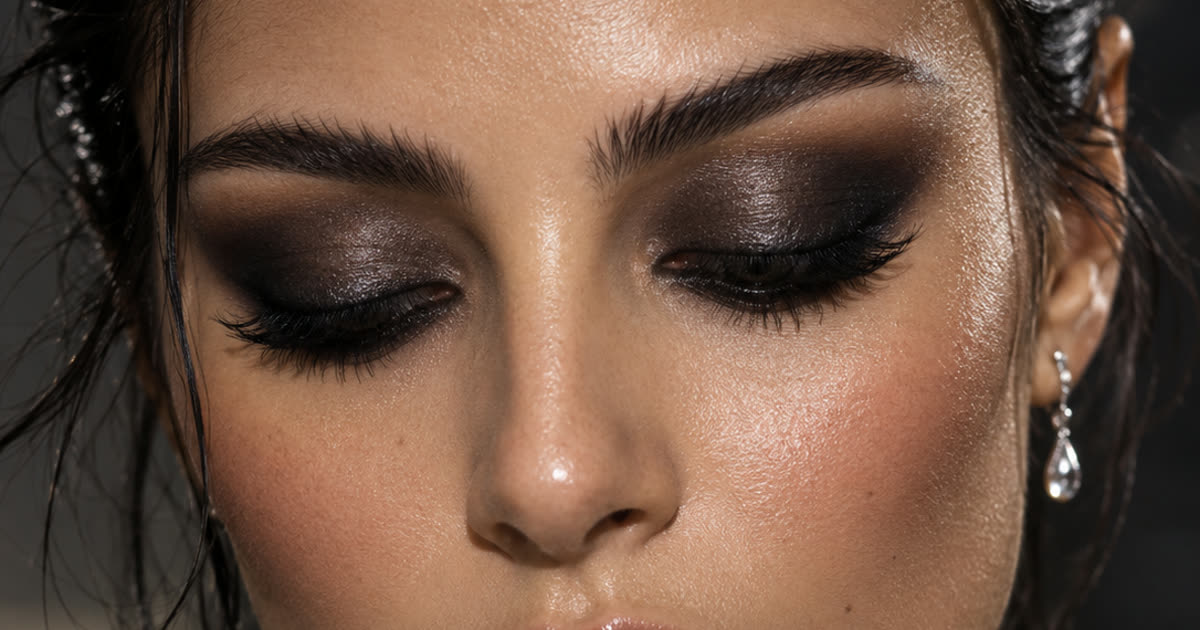
If your eyeshadow looks great in the mirror when you look down and vanishes when you look straight ahead, you have hooded eyes. The skin below the brow folds over the crease, so anything placed in the natural crease is hidden the moment the eye is open.
Nothing is wrong with your blending. The placement is just wrong for the shape.
How to tell if your eyes are hooded
Look straight into a mirror with your eyes relaxed and open.
- Can you see your mobile lid, the moving part above the lashes?
- Is your natural crease visible, or is it covered by skin from above?
If the lid space is mostly or entirely hidden, your eyes are hooded. It is a shape, not a sign of age, though lids do become more hooded over time.
The one rule that fixes most of it
Place colour higher than your natural crease, and judge it with your eyes open.
Find where the hood actually sits when you are looking straight ahead, and put your transition shade just above that line rather than in the crease underneath it. You are drawing a new crease in the place the eye can be seen.
Check constantly with the eye open. The mistake almost everyone makes is building the whole look looking down into a mirror, where the lid is stretched flat and everything appears to be in the right place.
Five techniques that work
1. Keep liner thin, or tightline instead. A thick line eats the small amount of visible lid you have. Tightlining, which means drawing along the upper waterline rather than on top of the lashes, adds density without using any lid space at all.
2. Wing outward, not upward. A wing that lifts sharply gets swallowed by the fold. One that extends more horizontally stays visible and makes the eye read longer.
3. Put the darkest shade at the outer corner. Work it in a small triangle at the outer third and blend it up and out toward the end of the brow. Dark colour across the whole lid closes the eye down.
4. Light in the inner corner, every time. A touch of something pale and slightly reflective at the inner corner opens the eye more than any other single step.
5. Curl the lashes and coat the roots. Hooded eyes benefit enormously from a lash curler, and from concentrating mascara at the base rather than the tips. Lifted lashes create visible space where there was none.
What to stop doing
A dark shade over the whole lid. It reads as a closed eye from any distance.
Heavy liner on the lower lash line. It drags the eye downward and makes the hood look heavier. Keep lower liner to the outer third, smudged.
A hard crease line. On hooded eyes it looks like a stripe, because it ends up sitting at an angle to the fold rather than following it. Diffuse everything.
Very shimmery shadow across the whole lid. Shimmer catches light on the part of the lid that folds, which draws attention to the fold itself. Keep shimmer to the centre of the lid or the inner corner.
The brow matters more than you think
On hooded eyes the brow and the lid are visually one unit, so a heavy brow pressing down makes the hood look heavier.
Brush the hairs upward, keep the underside of the brow clean, and avoid filling the brow very dark along its lower edge. A slightly higher, lighter arch buys you visible lid space without touching your eyeshadow at all.
Which looks suit hooded eyes
Looks that keep colour low and diffuse, or that concentrate density at the outer corner, suit hooded eyes best. Anything built on a clean, visible gradient across the whole lid does not.
Vélora reads your eye shape from your selfie along with your face shape and undertone, and places the eye makeup for the shape it finds rather than for a generic lid. If you have never been sure whether your eyes count as hooded, that is a quicker answer than squinting at a mirror.
Related: where to put blush for your face shape, and how to find your undertone.