How to choose a berry lip shade for your skin tone
Berry lips suit almost everyone, as long as the shade matches your undertone. Here's how to find yours, and what to do if the colour looks wrong.
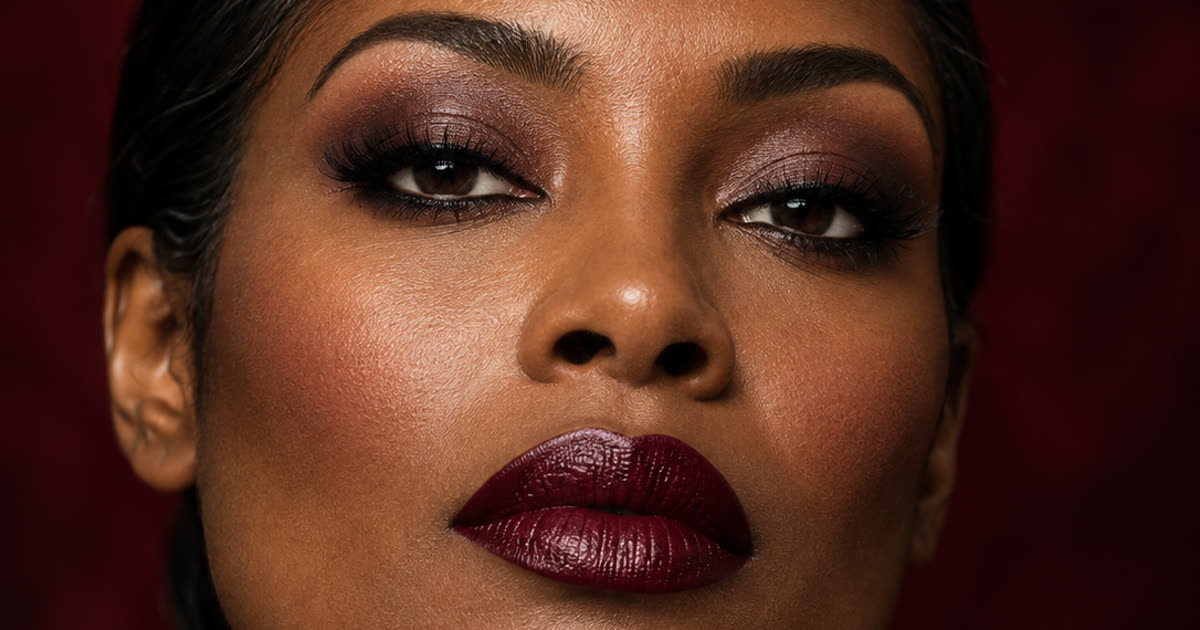
Berry lipstick suits nearly every skin tone. What varies is the undertone of the berry, not whether you can wear one. A blue-based wine and a warm brick-berry are both "berry," and they behave completely differently on the same face.
Get the undertone right and a deep lip looks intentional. Get it wrong and it reads harsh, or oddly flat, or like it's wearing you.
First: find your undertone, not your depth
Depth is how light or dark your skin is. Undertone is the colour underneath it, and that's the one that decides your shade.
Three quick checks:
- Veins at your wrist. Blue or purple suggests a cool undertone. Green suggests warm. Hard to tell means neutral.
- Silver vs. gold jewellery. Whichever makes your skin look brighter rather than sallow points to your undertone: silver for cool, gold for warm.
- White t-shirt test. Pure white flatters cool undertones. Off-white and cream flatter warm ones.
If two of the three agree, that's your answer. Neutral undertones can wear both, and should pick based on contrast instead (see below).
Matching the berry to the undertone
| Undertone | Go for | Avoid |
|---|---|---|
| Cool (blue/pink) | True wine, plum, raspberry, blue-based burgundy | Orange-leaning brick and rust |
| Warm (golden/olive) | Brick-berry, oxblood, warm cherry, mulberry | Icy fuchsia and stark blue-reds |
| Neutral | Most of them; pick by depth instead | Nothing in particular |
Then: match the depth to your contrast
Contrast is how different your features are from your skin. Dark hair and brows against fair skin is high contrast; blonde hair and fair skin is low.
- High contrast can carry the deepest shades. Oxblood and near-black cherry look balanced rather than severe.
- Low contrast is usually better served by a berry a few steps lighter, or by the same deep shade applied sheer and blotted. The colour is the same; the intensity is dialled down to match the face.
This is why "that shade looks amazing on her" so often fails on you. It usually isn't the undertone. It's the contrast.
Four ways a berry lip goes wrong
It makes your teeth look yellow. The culprit is a warm, orange-leaning berry. Shift to a blue-based wine; it optically whitens teeth.
It looks harsh against bare skin. A deep lip needs something to balance it. Add definition at the lash line and a little blush. The lip isn't the problem, the empty face around it is.
It bleeds. Line the full lip before applying colour, and blot once with a tissue after the first layer. Deep shades travel more than nudes because the pigment load is higher.
It looks flat. Fully matte deep shades can read as a block of colour. Blotting and reapplying only to the centre of the lip gives it dimension back.
Sheer, satin or matte?
- Sheer or stained is the most forgiving and the most current. It's the version in the fall 2026 "blurred lip" trend.
- Satin is the safest for photographs. It has enough finish to catch light without the shine reading as grease.
- Full matte is the most dramatic and the least forgiving of dry lips. Exfoliate first or skip it.
Seeing it before you buy
Lipstick is the hardest makeup category to buy unseen, because the shade in the tube is rarely the shade on your mouth. Swatching on your hand doesn't help much either, since the skin on your hand isn't the colour of your face.
Vélora renders a look onto your own selfie, so you can see a deep berry against your actual complexion before spending anything. Two looks in the catalog centre on exactly this:
- Vamp: a deep wine or oxblood lip with softly smoky eyes.
- Cherry Cola: a glossier deep cherry with blended brown liner and warm brown eyes.
For more on the season's other trends, see fall 2026 makeup trends worth actually trying.